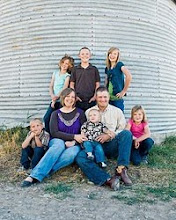
There is a movement gaining momentum to reduce government spending, and the cry to end farm subsidies is getting louder and louder. We can try to fight against this movement, and very likely lose, or we can join with this movement and ensure the economic sustainability of agriculture for future generations.
Saturday, December 11, 2010
Economic Sustainability
There is a movement gaining momentum to reduce government spending, and the cry to end farm subsidies is getting louder and louder. We can try to fight against this movement, and very likely lose, or we can join with this movement and ensure the economic sustainability of agriculture for future generations.
Monday, July 19, 2010
Fix The Formula by Mike Kohler and Utah Dairyman's Association
Why are farm gate prices still extremely low when processors are asking for more milk?
Why have raw milk prices moved so much in the last couple of years in spite of consistent, steady growth in supply and demand?
Why, in 2008-9, when our industry killed 350,000 cows (CWT), did the price not recover?
ANSWER: Traditional supply and demand rules are not being used to set farm gate milk prices.
Contrary to popular belief, supply vs. demand is no longer the driver of commodity price changes on boards of exchange and hasn’t been since 1995. Traders on these boards are now using billions of dollars of speculators capital to move the price instead of taking the price in the market. They make money based on the price moving. It is not the hedge market that it was set up to be. To illustrate the point, let’s look at farm-gate prices over the past 22 months:
(June ’08 to June ’09) DOWN $10.28/cwt
(June ’09 to Dec ’09) UP $ 5.01/cwt
(Dec ’09 to Apr ’10) DOWN $ 2.20/cwt
(Cheese Reporter, 4/16/10)
During this same time total US production was unchanged.
2008 189.9 Billion lbs
2009 189.5 Billion lbs
We even killed 350,000 cows and it didn’t make a difference. It’s obvious that something besides supply and demand are at work here. SUPPLY and DEMAND are in balance. Consumer demand is on a strong and steady rise and has been for 25 years. Supply has followed the same steady rise as demand. Here are a few more facts:
Domestic demand has increased to 610 lbs/person/year of fluid milk
equivalent.
Total cheese in cold storage has steadily increased to maintain a 32-34 day supply for a population that has more than doubled its cheese consumption since 1985. (17 lbs per person to 34.5 lbs per person)
Supply of milk has climbed on a steady slope to match demand.
155 Billion lbs in 1995 to 189.5 Billion lbs in 2009.
Our check off marketing efforts have worked. Consumption is keeping up with our production.
Meanwhile, since 1995, prices to farmers have been recklessly volatile. Dairy farmers have lost over $11 billion equity in 2009 alone. This is ownership equity that they’ve handed over to banks so that they can continue to provide a delicious, nutritious, wholesome product. This is not capital of some big corporation. This is hard earned capital family farmers have scraped together over 20-30 years!
EXPORTS
Consider the period from August 2008 - February 2009. During this time dairy exports declined 1.805 billion lbs (average of 258 million lbs per month). This made every dairy newsletter and hundreds of other publications. Everybody was talking about it.
The reason exports declined is because the economic decline in countries like China and Indonesia diminished their ability to pay for US dairy proteins which were priced at an alltime high. ($21.00 milk) And, the only export enhancement/support program in place at the time, CWT, was suspended.
PRODUCTION: TOO MUCH OR NOT?
With historically low prices, plans were devised to kill cows to control the supply. The mindset of many in the industry was that if the price is so low, we must be producing too much milk. But, during this same period (Aug ’08 – Feb ’09) milk production actually DECLINED an average of 332 million lbs per month, totaling 2.324 billion lbs. Net change in supply: a DECREASE of 519 million lbs. In addition, 2009 was the 4th best year for dairy exports ever. Since the decline during fall of ‘08, world economies are stabilizing and/or in recovery. Our foreign consumers are able to buy our product again.
So what should we do?
Supply management plans being pushed all rely on the premise that changes in supply dictate changes in price. Clearly NOT true since 1995. Since there is momentum to do something to correct the problem, we must make sure we are curing the right aliment. The problem is not production, it’s the pricing formula. A solution will require more than just one “fix.”
Here are some suggestions that ought to be contained in any plan to stabilize farm-gate prices:
1. Use an Input Index - Stability for the industry is critical. The FMMO should incorporate an index which assures that returns to the farmer stay above the costs of inputs.
2. Volatility Modifier - Apply a weighting ratio to the FMMO calculation to reduce the volatility that comes with the boards of exchange impact to the FMMO. The calculation could be the same as it has been for years, with the simple application of the weighting ratio. For example:
Current Price = current price calculated as before X 33.3% (weighting current month) + price of each of the past 4 months times 16.7% = Modified Current Price
3. Market Clearing Mechanism - Periodically there will be excess product. Provided that processors are required to package dairy products in a form that meets the preferences of our consumers, both foreign and domestic, excess product can be “cleared off the market” through existing Nutrition Programs. Historically, over 70% of the cost of each Farm Bill actually funds Nutrition Programs like food stamps, WIC, school lunch, etc. These programs should be used to feed our fellow Americans with safe, nutritious foods produced by Americans.
We may only have one chance to solve this. We need to get it right.
For more information, Mike can be reached at mikekohler2009@gmail.com or call any Utah
Dairyman’s Association board member.
Special thanks to Utah Dairy Commission and Ray Buttars for providing data for this article.
Monday, June 21, 2010
Why I Support Mike Lee
We first heard Mike Lee speak back in January. He gave a two hour speech on the constitution, and then answered questions for at least another hour. We were so impressed with his knowledge and his love of the constitution. Even more than his speech, what impressed us was the way he answered questions. He was so respectful of the people asking the questions, and he always had very good and honest answer. It was after that speech that we first volunteered to help with Mike’s campaign here in Cache Valley.
We have had the opportunity to meet with Mike several times since, and have become even more convinced that he is the right man for the job. He WILL be an effective leader in the Senate.
Much has been said about the choice between a businessman and an attorney. While it is important to know what these two men have chosen as their profession, we believe it is more important to know what they have used their chosen profession to accomplish, as this may give us insight into the positions they will take as our Senator.
Tim Bridgewater co-founded Interlink Capital Strategies which is a consulting firm that helps businesses secure US federal grants and loans. Recently Interlink helped secure $10 Million in IPOC loans to help build affordable housing in Mexico (i-caps.com/ICS/Services.html)
Mike Lee is an Attorney who has a proven track record of standing up to the government and defending the rights of the people. He fought the Obama administration in reopening 77 oil and gas leases in the Uintah Basin. He fought the ACLU in its efforts to have access to the Main Street Plaza in Salt Lake City. He fought for Kane County’s rights to maintain access trails on federal ground. Right now we need someone to represent us who has a proven track record of standing up to the government and defending the rights of the people, Mike Is that man.
With regards to Mike's involvement with Energy Solutions here's the truth:
While serving as Governor Huntsman's general counsel, Mike Lee lead the fight to keep nuclear waste (that is, spent nuclear fuel) out of Utah. That fight proved successful in 2006. Several years later, Mike's law firm was retained by EnergySolutions to represent that company in one case -- and one case only -- because of Mike's expertise in constitutional law. That case had nothing to do with spent nuclear fuel. Nor did it have anything to do with whether it is a good idea to dispose of Class A material, whether foreign or domestic, in Utah. Rather, that case dealt with whether the authority to restrict the importation of Class A material resides with (a) the States, or (b) the federal government. The federal district court agreed with Mike's argument that the Constitution leaves such import decisions in the hands of the federal government. Mike does not believe that Utah should be he world's dumping ground, and would support federal legislation establishing a categorical ban on the importation of Class A material. Mike also continues to oppose any plan to dispose of nuclear waste in Utah. Mike knows first hand the consequences of exposure to this harmful material. In 1996, Mike's father Rex Lee died from a form of downwinders syndrome. This tragic loss for the Lee family has made Mike an advocate against any harmful waste material. Mike's willingness to be a champion of the Constitution -- even where it might not be popular -- is demonstrated by his expert handling of these complex issues.
We hope you will join us, tomorrow, June 22 in voting for Mike Lee to be Utah's next Senator.
Thank You,
Garrick and Holly Hall
P.S. please feel free to call if you have any questions about Mike that we might answer for you. 435-232-1117
Sunday, March 7, 2010
Visit to Schreiber Foods
I have had the chance to tour several cheese plants, but I was particularly impressed with this one. I noticed right away that the people who work there are referred to as partners, not employees. This is because Schreiber is employee owned, so they are all literally partners in the business. Everyone in the plant was very friendly and helpful, even though we were in their way. I was told there are about 450 people that work in the plant. They make several different kinds of cheese, mostly Swiss and American (cheddar, mozzarella). However, the largest part of the plant is the cutting and wrapping department. Much of the cheese they package is purchased in 40 lb blocks or barrels from other cheese plants in the region. They package cheese for many major retail stores, including Sam's Club, Costco, and Western Family to name just a few. They also provide cheese to such places as McDonalds, Taco Bell, and The Olive Garden. Cheese packaged in this plant is shipped all over the western US.
I was very impressed with the efficiency and professionalism that I saw on my tour. Schreiber is very important to our county, not only do they have the cheese plant in Smithfield, but they also have a plant in Logan. Schreiber provides many good jobs as well as very tasty, high quality cheese for all of us to enjoy. I was struck by the thought that as important as Schreiber is to our community, they could not exist without the dairies that produce the milk they need to make cheese. Businesses like Schreiber are the reason a recent Utah State study found that 15% of the economy of Utah is based on agriculture, while less than 2% of the public live on farms.
After my visit I made the decision to begin selling the milk from my dairy to Schreiber Foods.
Saturday, March 6, 2010
Nightline Response
While I immediately saw this report for what it truly is, I realized that people unfamiliar with modern dairies would likely believe the fallacy of the report and believe that cows are abused and mistreated by dairy farmers, this could not be farther from the truth. In an attempt to counter the claims in the Nightline report I will attempt to compare cows to people, only because the term “Humane” is used so frequently to describe the way farm animals should be treated, although they are not human and should not be confused as such.
The cows in the report were shown standing in a crowded holding pen with no room to move, the assumption was made that cows are kept in this condition all day, every day, when in reality those cows were there only for a few minutes while waiting for their turn to go into the barn to be milked. This is much like stepping into a crowded elevator or crowded subway car, we would not want to be there all day, but we tolerate it long enough to get where we are going. After being milked all the cows returned to their pen where they have access to fresh feed, water and a dry comfortable stall to lay down in(not shown in the report).
During stormy weather people like to be inside where it is warm and dry, these cows have a warm dry barn to protect them from stormy weather. Likewise, when it is hot outside people like to stay inside an air-conditioned building, these cows have a shaded barn with fans and misters to keep them cool and comfortable.
These cows have their home cleaned at least once, probably twice a day. I know the report shows cows in several inches a manure, however since no reasonable explanation was given, I will assume that the corrals were in the process of being cleaned, the manure had been pushed to one end of the coral but had not yet been pushed all the way out of the coral (video footage being taken out of context for shock value). Some cows seek out dirty spots to lie in and seem to be able to find one regardless of the care taken to prevent it. We all know people whose personal hygiene is less than perfect; these people are the exception not the rule.
These cows have their beds made for them at least daily (raked out with clean fresh bedding applied as needed).
Every day these cows are fed a diet that is specially formulated to meet their nutritional requirements. This diet is formulated by a trained professional dairy nutritionist in order to provide the best health and comfort to the cow. These cows are also provided with all the fresh clean water they can drink (water being the beverage of choice for cows).
I hope you are beginning to see that these cows may be treated more “Humanely” than a lot of people. They are also provided with a pedicurist (Hoof trimmer) and a doctor (Veterinarian) when ever needed without having to worry about paying the bill.
There seems to be much concern about the pain involved with certain management practices such as dehorning. While there is some pain involved with dehorning the animals are better off without their horns. People undergo medical procedures that are painful knowing that it is for their own good. Who enjoys having their wisdom teeth pulled, it is painful and can cause discomfort for several days, yet we still pull wisdom teeth. Similarly we must dehorn calves for their own good. Dehorning methods have improved greatly over the years, we used to take a saw and cut the horns off (talk about a bloody mess). Today we simply burn them for a few seconds while the horns are still very small.
I know of no one who docks tails in the manner shown in the report, all the dairies that I know use rubber bands that cut of circulation and then the tail just falls off after a few days. There seems to be very little pain and no blood involved with this method.
The report concludes with an attack on the ethics of America’s dairy farmers. I would say the ethics are with the people who get up early every morning 365 days of the years (weekends and holidays included) to place the care and well being of their cows above their own comfort and often that of their family. America’s dairy farmers take pride in caring for our animals and producing a safe wholesome product for you and your family. In the future if people have questions about farming don’t ask ABC –ask a farmer. For more information on animal care go to www.conversationsonanimalcare.org.
Monday, November 9, 2009
Where did the fence post go?
The days of fencepost conversations are nearly a thing of the past. It is almost impossible to see farmers/neighbors leaning on a fence post, discussing the current issues in agriculture and the world as a whole. In today’s society, technology has taken over the way we communicate with
even our next door neighbor. Cell phones, computers, GPS systems, and iPods are just a few of the new devices commonly seen near or on the farm.
Facebook, blogs, twitter, and messengers are just a few of the ways people communicate with these new technologies. PETA and many other organizations are very familiar with all of these technological advances and are using them to get their word out and falsely inform people about
the practices of agriculture.
While attending a state Farm Bureau women’s conference, Melinda was awakened to the steps that other organizations are taking to accuse ag producers of malnourishing, mistreating, and endangering the animals in their operations. Through ways such as YouTube videos they are misinforming the public on all of our practices. This takes a heavy toll on the image of the farmer/rancher, and thus impacts the sale of our product. It is amazing how little the majority of the U.S. population knows about where their food comes from and how it is brought to their grocer.
The youth of today are very familiar with all of this new technology, but often even more naïve about the food they eat. In the classes Jason teaches, students are required to use the internet regularly, for research and learning. He has assigned students to research various agriculture topics and take a stand on issues affecting agriculture. Students can find both positive and negative views of agriculture with just the click of a button. Videos such as, “The Meatrix” can confuse students as well as adults who may see them. If not explained the actual practices used on our farms and ranches, people just assume that the “truths” given to them from other sources are correct. This leaves them with an inaccurate perception of the way agricultural practices occur.
As agriculture producers and enthusiasts, we have a responsibility to occasionally leave the fence posts and learn these new technologies. We need to take it upon ourselves to promote our own operations, giving people a new and accurate insight to what really happens on our operations.
This will help students and the public in general to see the correct view of our agriculture practices and get rid of the negative image that has been placed on us by outside organizations.
Friday, October 16, 2009
New York Times attackes the Farm Bureau
By Kate Galbraith
American Farm Bureau The American Farm Bureau, a large agricultural lobby, is gearing up a campaign to defeat climate legislation now pending in Congress.
The politically influential American Farm Bureau, the self-described “national voice of agriculture,” has outlined a new campaign effort to derail Congressional bills to combat climate change.
In a memo obtained Wednesday by Green Inc. and addressed to state farm bureau directors, the group’s public-relations director, Don Lipton, wrote:
Climate change bills in both the Senate and House will impact our farmers and ranchers, hit America’s consumers and impair the economy of our nation. For farmers and ranchers, it will mean higher fuel and fertilizer costs, which puts us at a competitive disadvantage in international markets with other countries that do not have similar carbon emission restrictions. For the future prosperity of the U.S. economy and American agriculture, climate change legislation must be defeated by Congress.
The authenticity of the memo was confirmed by Cody Lyon, the American Farm Bureau Federation’s director of grassroots and political advocacy.
The campaign’s slogan will be “Don’t CAP Our Future” — a play on the baseball-style caps often worn by farmers. According to the memo, state farm bureaus will get a campaign “starter kit” — including themed stickers — by early next month.
The memo urges members to place a “Don’t CAP Our Future” sticker on a farmer’s cap, sign either the sticker or the cap, and hand-deliver it to a local office of the United States Senate.
“The timing is very beneficial as many state Farm Bureau annual meetings are right around the corner,” the memo says.
Other suggested tactics include: sending messages to Senate offices; an online petition; a large banner and booths at the annual state farm bureau meetings; passing a resolution against the climate bills at state meetings; and writing opinion articles for local papers.
The American Farm Bureau’s position puts it at odds with the Secretary of Agriculture, Tom Vilsack, who has argued that the costs of cap-and-trade to farmers will be outweighed by the benefits — from carbon offset revenues, for example.
The farm bureau has also recently campaigned against the possibility of a “cow tax” on methane emissions, which the Environmental Protection Agency has not proposed to do.
Cap and trade will harm all farms, not just the so called 'factory farms". As the owner of a small family dairy farm I understand that the current cap and trade legislation would most likely force my family out of business. If we run farms out of the US, the millions of people who depend on American farmers for food, will be forced to get food grown in other countries, countries that do not meet the rigorous environmental standards we as American farmers meet. The end result will be to increase, not decrease the "carbon footprint" of the food we eat.
I applaud the Farm Bureau for standing up and fighting for all US farms. Cap and trade is not only bad for farmers, it is bad for our environment and bad for America.
Thursday, October 15, 2009
Life On our Farm
Tuesday, October 6, 2009
Cap and Trade
I’m Garrick Hall, my wife and I and our five children own and operate a small dairy in northern Utah. We take pride in caring for our animals and producing high quality milk. Supporting a family on a small farm is not easy but we manage. I want to take a minute to tell you how proposed new legislation would affect my family’s dairy farm and others like us.
The Waxman-Markey cap and trade bill, currently under consideration in the US Senate, is simply a tax on energy. It takes a lot of energy to run our dairy farm. It takes a lot of electricity to run the motors used to milk the cows and cool the milk. We use a lot of diesel to run the tractors used to feed and care for the animals. It gets very cold in the winter where we live so we use natural gas to heat the barn and keep things from freezing up. We have to pay freight costs to bring feed into the dairy and to haul milk out of the dairy. All these costs would increase significantly if cap and trade is implemented.
Using numbers from the Heritage Foundation, if Cap and Trade had been fully implemented in 2008, it would have cost my family over $23,000 in increased energy costs. Roughly the cost of a brand new car for my family.
My fear is that I will be left to pay these increased expenses, with little if any increased revenue. Because these expenses will only be charged to US producers, they will not have a significant effect on Climate Change; however they will put American farmers and ranchers at a disadvantage in a global market. If we increase cost to Farmers here in America without requiring the same from farmers in other countries, farm production will be driven out of the United States and food will be imported into the US. If we are truly concerned about our “carbon footprint” this should be very concerning. Farmers in many of the countries that will most likely replace the American farmer do not have to comply with the strict environmental regulations we impose here in the US. Simply put US farmers can produce more pounds of food per pound of carbon emission than farmers in most foreign countries. Forcing food production out of the US would in the end have a negative effect on carbon emissions, or increase the “carbon footprint” of the food we eat.
The bottom line is that Cap and Trade would most likely force my family along with many other livestock farmers out of business. Much of rural America is dependent on these livestock farms. From the purchasing of feed, supplies, labor, equipment, and much more, along with processing, hauling, and marketing of the products we produce. There are a tremendous number of jobs and people depending on the livestock industry. The result of Cap and Trade would be to run livestock farmers (such as myself) out of business and devastate the rural communities we support, while failing to significantly affect Climate Change.
Tuesday, August 25, 2009
Telling My Story
I own and operate a dairy farm, it is not just a job, it is my way of life. My children help with the chores, everything from feeding calves to milking to opening gates while I clean corals. They are as much a part of my dairy as anyone. Just the other day I was talking to some of my neighbors about what needed to be done while I was gone. My three year old son jumped into the conversation by telling them that someone had to milk, and someone had to feed the cows. We need to scrape the corals, but the tractor is broken so we have to use the skid loader, and on and on. It is as important to him as it is to me. I am constantly amazed by my 10 year old son, because he now knows the cows better than I do. If a cow or calf looses their tag, he can always tell me who it is. He can even tell me who their mothers are; he remembers them because he fed them as calves. I tell these quick stories to show that we do care for our cows. It is not uncommon to be up early or out late taking care of a sick calf or checking on a cow that is calving. Even on weekends and holidays the chores must be done before anything else.
With my family being so much a part of my life, the last thing I would want to do is endanger their health and future wellbeing by harming the environment and/or my community (as the critics of modern agriculture suggest I do). Our home is right next to our dairy. We take great care to see that the manure from our cows does not get into any water ways or cause any environmental damage; it is used as fertilizer to help grow crops to feed the cows. We understand the value of preserving and protecting the environment as our livelihood depends on it. Who is more likely to properly care for the environment, someone who visits once or twice a year or someone who is there every day? In reality, farmers and ranchers are the best stewards of the land because we have the most at stake.
In order for my cows to support me and my family they must be well cared for. The claims that we do not care for our animals, and are only involved for the profit is absurd. I would however like to see some profit someday soon. When one of your children gets sick, you take them to the doctor, give them medicine or do whatever is necessary for them to get better. We do the same for our animals. I consult regularly with my veterinarian, use antibiotics when needed, (but only when needed as they are expensive) and provide whatever care is needed to help the sick animal get better. I have found that this extra care most often takes place in the middle of the night or in a pounding rain, often an a Sunday morning, but it is part of the job and we do what we have to. Our animals are our livelihood, they are of the utmost importance to us. They do not sleep at the foot of our beds at night, have a place at the dinner table, or get invited in for family prayer, (although they are prayed for regularly). I am sometimes asked how I can spend all the time raising these animals and then send one of them to slaughter. The answer is simple; we understand the purpose of our animals, and the cycle of life.
Modern agriculture is often criticized for changing and adopting new technology. Today’s farms are not the same as they were 40 or 50 years ago, no industry is. Modern technology has allowed for higher yields per acre/per animal. This is important in order for us to feed an ever increasing population, on fewer and fewer acres. Modern technology also increases the quality and safety of the food we produce. Today, we can test for and prevent diseases that we did not even know existed 50 years ago. I know we hear about food recalls and people getting sick form something they ate, we only hear about this because today we have the ability to test for and track a disease all the way back to its point of origin, we could not do this 50 years ago. Modern technology allows us to produce food and get it to your table cheaper, this doesn’t happen because we cut corners on quality, we are simply more efficient at producing the food. Even on my relatively small family farm, I readily embrace new technology and am thankful for it. I would not want to go back to the “good old days” when everyone had 2or 3 cows some chickens and a pig in order to feed their families. My grandpa used to tell stories of hauling milk in a horse and wagon, he had to load the ten gallon milk jugs up onto the wagon at each stop and then deliver them to the creamery to be made into cheese, much less sanitary than the refrigerated trucks we use today. In his later years he told me anyone who talks about the “Good Old Days” has a dam poor memory.
I love being a farmer and being able to raise my children with a love for the land and the animals which we are stewards over. I take great pride in producing a product that is healthy and nutritious as well as delicious. When I take a drink of milk, eat a slice of cheese, or enjoy a bowl of ice cream, I am happy to have been able to produce the milk that went into that product. I personally know many farmers and ranchers from across the country who feel the same way about the products they and their families produce on their farms. In the United States today we have the cheapest, safest, most abundant food supply in history. I feel it is time that story is told.
Saturday, April 18, 2009
State FFA Convention
I think about myself- when I was younger I was very quiet, I did not want anything to do with speaking in front of people. I didn't like speaking at all. One day someone told me about the YF&R discussion meet and suggested that I enter it. I thought "no way". However, after watching my wife compete the first time I decided that I could try it. I believe this was one of the best decisions of my life, as it has in many ways changed my life. The first time I did the discussion meet I was terrible. I was very nervous at first and did not do very well, but I survived. The next year it was easier to compete and I did much better. During several years of competing, I slowly gained confidence in myself and my ability to speak and articulate my point of view. I finally won the state discussion meet and a Polaris four wheeler. I am told all the time what a nice reward the four wheeler is for my effort, however I believe the real reward was much more than that. Competing in the discussion meet helped me gain confidence in myself and has led me to do many things I other wise may not have done. Such as becoming the state YF&R chairman, testifying before a state senate committee, and speaking at the FFA convention.
I hear people tell me all the time that they cannot do things like this, but I believe they simply lack the confidence to try. I now look for opportunities to make myself do things that seem beyond my abilities, because I know these are opportunities for me to learn and improve myself.
I wish I had learned this lesson in high school as these FFA students are, they are far ahead of where I was at their age.
Friday, February 13, 2009
AFBF YF&R Leardership Conference
Part of the conference is the National Collegiate Discussion Meet. Each state is allowed to bring two competitors, the winner gets a $3500 scholarship. This was the first year that Utah sent anyone to the contest, we were very excited, as we had worked hard to make this happen. Mike Hughes won our state competition at USU, and traveled with us to the conference. We felt Mike was very qualified to compete, but not having been involved with this contest before we were a little unsure what to expect. As it turned out, Mike did very well. He has a natural ability to speak in front of people, articulate his ideas, and do it with a smile. The audience couldn't help but love him. In the end he was in the final four, I thought he won, but the judges chose another winner, Mike must have been second. He still won $1000 scholarship, not bad.
Several of the presenters seemed to adress the idea of speaking up for Agriculture and telling our story. There was a lot of talk about Proposition 2 in California which effectively outlaws
gestation crates for hogs, veal crates, and battery cages (for egg production). Farm Bureau spent millions of dollars to fight this but was unsuccessful. The thinking is that we were too late getting organized and not very effective telling our story. We simply recited statistics and science. The proponents used emotion, and they were very successful. To combat this in the future we need to be telling our story before we are attacked and put on the defensive. Several ideas were discussed on how to tell our story; there is much to do. I decided to start this blog to talk about my experiences on my family farm, and my thoughts on how a variety of issues will effect not only our farm, but every family that is involved with agriculture.